
Presentation of the field
« Ensuring the development and quality of life of future generations while protecting our planet.»
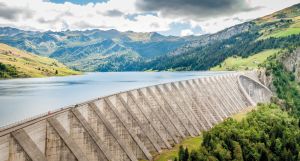
Development and growth must go hand in hand with social and environmental responsibility in order to successfully achieve the ecological and energy transition and effectively manage major risks. The goal of the Environment, Energy & Risks area of excellence is to train professionals capable of analyzing how complex systems function, managing their evolution in a sustainable manner, and mitigating risks.
The “Environmental and Energy Engineering” field comprises 11 specialized tracks and trains approximately 125 students each year. Each track is supported by strong academic and industrial partnerships that provide cutting-edge training to address challenges and “ensure the development and quality of life of future generations while protecting our planet.”
11
Programs are offered in the area of excellence in Environmental and Energy Engineering
General Engineer
Upon completion of the core curriculum of the general engineering program, 6 specializations (including 4 dual-degree tracks) are offered in the area of excellence in Environmental and Energy Engineering.
Its strength lies in the complementarity between the different disciplines
Antoine RIVET
Generalist Engineer, Energy & Environment option
The “Environmental and Energy Engineering” track focuses on two major societal challenges: energy management and environmental conservation. Students in this program develop a comprehensive understanding of pollution management across various environmental domains (soil, water, air, and waste) and energy-related issues (production, storage, distribution, and energy efficiency). They are able to devise and propose sustainable solutions to meet the expectations of industry and society, whether at the process or regional level. In addition to strong technical skills, they demonstrate genuine abilities in leadership, communication, and persuasion.
Graduates join large corporations, small and medium-sized enterprises (SMEs), engineering firms, and local governments as research analysts, project managers, site managers, or environmental managers.
Programme of the option :
The syllabi are currently being updated and are subject to change.
1h00 = 55min
Environment, Energy, Risks - 42H
- Industrial and natural risks
- Ecosystems and biodiversity
- Energy issues
- Impact assessment
Industry and Territory - 41H
- ICPE Regulations
- Geographic Information System
- Meteorology
- Pollutant Dispersion in Soil
- Atmospheric Dispersion
- Aria Impact Modeling
- Risks and Land Use Planning
Process engineering - 71H
-
Mass Transfer
-
Distillation
-
Chemical Reactors
-
Energy Balance
-
HAZID and ENVID Methods
-
Site Visits
Project “Implementation of an industrial unit in a territory” - 81H
- Process Engineering, Industry and Regional Development, Environmental Assessment, Public Consultation
- Site visits
The syllabi are currently being updated and are subject to change.
1h00 = 55min
Water Quality Management - 59H
-
Introductory Lecture
-
Environmental Monitoring
-
Environmental Management of Water Resources
-
Sewage Systems
Management of polluted sites and soils: risks and issues - 22H
-
Risks and Challenges
Circular Economy - 48 Hours
-
Ecologie industrielle et Territoriale : définition et prise de recul par rapport à l'économie circulaire
-
Projet EIT
Waste Management and Energy Recovery - 36 hours
-
Overview of Waste, Regulations, and Specific Cases Involving Organic Waste
-
Cogeneration – Energy Fluid Networks – Site Visit
Water Treatment and Byproduct Recovery Project - 43 hours
Energy Production and Use - 64 hours
-
Wind Energy
-
Solar Photovoltaic Energy
-
Hydropower, Marine Energy
-
Bioenergy
-
Nuclear Energy
-
Financial Analysis
The syllabi are currently being updated and are subject to change.
1h00 = 55min
Energy Storage and Distribution - 50 hours
-
Smart Grids
-
Energy Storage, Batteries
Energy Efficiency and Process Integration - 40 hours
-
Energy Optimization
-
Process Integration - Energy System Modeling
Air Quality Management - 32 hours
Energy and Environment Project - 90 hour
Sandrine Bayle
Manager
Generalist Engineer, Natural & Industrial Risks option
An engineer specializing in major risks draws on a solid, broad-based education. This expert has a very strong understanding of major risks, the modeling of their consequences, their impacts on the region, and methods for prevention and crisis management. They may advance to executive positions in the QHSE (Quality, Health, Safety, Environment) department of an industrial company, in a risk assessment and engineering firm (specializing in technological and natural risks), or within government agencies or local authorities.
Programme of the option
The syllabi are currently being updated and are subject to change.
1h00 = 55min
Environment, Energy, Risks - 42H
- Industrial and natural risks
- Ecosystems and biodiversity
- Energy issues and energy systems
- Impact studies
Industry and Territory 41H
- ICPE Regulations
- Geographic Information System
- Meteorology
- Pollutant Dispersion in Soil
- Atmospheric Dispersion
- Aria Impact Modeling
- Risks and Land Use Planning
Process engineering - 71H
-
Mass Transfer
-
Distillation
-
Chemical Reactors
-
Energy Balance
-
HAZID and ENVID Methods
-
Site Visits
Integrative Project: “Establishing an Industrial Facility in a Region” – 81 hours
- Process Engineering, Industry and Regional Development, Environmental Assessment, Public Consultation
- Site Visits
The syllabi are currently being updated and are subject to change.
1h00 = 55min
New Challenges in Risk Management - 50 hours
-
Major Risks and Climate Change
-
Characterization of Major Risks in Industry
-
Immersion in a Crisis Simulator
Modeling Hazardous Industrial Phenomena - 60 hours
-
Runaway chemical reaction—hazardous
-
Atmospheric release
-
Fire
-
Explosion
Modeling Hazardous Natural Phenomena - 48 hours
-
Droughts and Forest Fires
-
Floods and Tsunamis
-
Landslides and Rockfalls
Risk Analysis and Management - 52 hours
-
Risk Analysis and Assessment Methodology
-
Risk Management and Operational Safety
-
Transportation of Hazardous Materials and Regulations
Technical Course of Choice - 120 hours
Resilience of Regions and Organizations - 57 hours
- Emerging Risks, Cyber Risks, and New Risks for Businesses
-
Resilience of Regions
-
Organizational Resilience and Human Factors
Emergency and Crisis Management - 63 hours
-
Crisis Preparedness, Planning, and Communication
-
Operational Mapping and Geomatics
-
Training in a Crisis Simulator
Practical Project - 90 hours
-
“Safety Engineering” Project
-
“Emergency and Crisis Management” Project
Florian TENA-CHOLLET
Manager
Example of R&D missions
- Study of the Impact of Gamification on Risk Awareness and Crisis Management: Prototyping an Escape Game
- Assessment of the Methanogenic Potential of Non-Methane Volatile Organic Compounds Emitted by the Manufacturing Industry
- Study of the Effects of a Forest Fire on an LPG Tank at the Habitat/Forest Interface
Example of end-of-studies projects
- AECOM France: Development of a calculation tool and a methodological guide for modeling hazardous phenomena
- TUV Sud: Development of equipment to measure the minimum ignition energies of vapors and gases
- BRL Ingénierie: Inflatable river dams: calculation of dam discharge based on geometry and sizing of the energy dissipation basin
- SBM Offshore: Method engineering, floating offshore wind turbines
- VALECO: Solar energy regional development manager
Master and Master's
International Master Disaster management & environmental impact (DAMAGE)
 Training in English
Master in Biotechnology and Innovation (BIOTIN)
Specialised Master in Industrial Safety and Environment
In double degree
Some students can complete their final year in the Water Master’s program at the University of Montpellier, which offers several specializations. These specializations allow students to delve deeper into the topic of water resource conservation and earn both an engineering degree and a master’s degree.
Some students from the PC program can enroll in a two-year dual-degree program with the École Nationale Supérieure de Chimie de Montpellier, choosing from the following tracks:
- Pollution Control and Environmental Management
- Chemistry and Bioprocesses for Sustainable Development
- Chemistry for Nuclear Energy and the Environment
- Engineering of Natural Active Ingredients
- Materials Chemistry
- Fine Organic Chemistry*
- Chemistry, Biology, and Health*
*Dual degree only
This program allows students to deepen their expertise in chemistry and earn two engineering degrees.
Students with a foundation in biology (BCPST track, bachelor’s degree in biology, or equivalent) can complete their final year in the Master’s program in “Biology and Health: Project Management and Innovation in Biotechnology” at the Universities of Nîmes, Montpellier, and IMT Mines Alès.
This track allows students to gain in-depth knowledge in the field of biotechnology and earn both an engineering degree and a Master’s degree.
Training in English, the number of places is limited!
This programme serves as an interface between two fields of application: disaster management and environmental impact assessment. This multidisciplinary approach will allow students to strengthen their knowledge base by adding an international dimension to large-scale crises. The proposed courses will allow students to assess risks (risk-analysis methods) and propose solutions for risk-reduction and preparedness planning. The students will be able to offer and professionally analyse management and coordination in the event of a human or environmental catastrophe.
Students can complete their final year in the Geosciences Master’s program at the University of Montpellier, which offers several specializations, including:
- Geological hazards: observations, measurements, modeling
- Coastal engineering & sustainable coastal development.
These specializations allow students to delve deeper into the topic of water resource conservation and earn both an engineering degree and a master’s degree.
Doctorate
Ph.D. in the Water, Resources, and Territories Research Team
Learn more about the Water, Resources, and Territories Research Team at IMT Mines Alès
Ph.D. in the Risk and Air Quality Research Team
Learn more about the Risk and Air Quality Research Team at IMT Mines Alès